
 Benin
Benin
Benin stretches from a narrow Atlantic coastline into a landscape of lagoons, low forests, and inland towns where water and land often blend into one another. Along the coast, Cotonou moves as the country’s main hub for trade and transport, with markets, roadways, and the port forming a constant flow of activity. Not far away, lake communities and smaller towns are built around fishing, waterways, and daily movement by canoe rather than road. Coastal towns like Ouidah reflect the country’s role in regional trade networks over several centuries, while inland areas preserve long-standing local traditions that remain part of everyday life. Across regions, daily routines are closely tied to the land, water, and movement between them.
Tours & Packages
- Destinations: Benin
- including closed packages

Trip Reviews & Photos
We love hearing your stories and seeing your photos! Check out our entire fan photo gallery and upload your photos.
Highlights
- Ouidah
Once one of the most important slave trade departure points on the West African coast, Ouidah today is a small coastal city shaped by its layered history. Landmarks such as the Door of No Return and the Route des Esclaves trace the final journey of enslaved Africans to the Atlantic. Alongside these sites, the city is also a major center of Vodun (Voodoo) practice, with shrines, temples, and annual ceremonies forming an active part of local life.
- Cotonou
Stretching between the Atlantic Ocean and Lake Nokoué, Cotonou functions as Benin’s largest city and primary economic hub, even though Porto-Novo is the official capital. The city is anchored by its busy port, open-air markets like Dantokpa Market, and major transport routes connecting the region. Street life, trade, and coastal activity define much of the urban landscape, with neighborhoods and waterfront areas blending commerce and daily movement.
- Ganvié
Built entirely on stilts above Lake Nokoué, Ganvié is one of West Africa’s largest lake villages, home to a long-established Tofinu community. The settlement was originally founded as a refuge, with homes, schools, markets, and transport all constructed on water. Canoes serve as the primary form of movement, and daily life revolves around fishing and lake-based trade across interconnected waterways.
- Voodoo Fest
Held annually on January 10 in Ouidah, the Vodun Festival is a national celebration of Benin’s traditional religion and cultural identity. The event brings together practitioners from across the country and the diaspora for ceremonies, drumming, dances, and rituals performed at temples and sacred sites. Public gatherings often take place along the Route des Esclaves and near coastal shrines, reflecting both spiritual practice and historical remembrance.
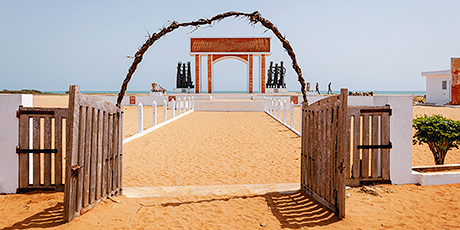 Once one of the most important slave trade departure points on the West African coast, Ouidah today is a small coastal city shaped by its layered history. Landmarks such as the Door of No Return and the Route des Esclaves trace the final journey of enslaved Africans to the Atlantic. Alongside these sites, the city is also a major center of Vodun (Voodoo) practice, with shrines, temples, and annual ceremonies forming an active part of local life.
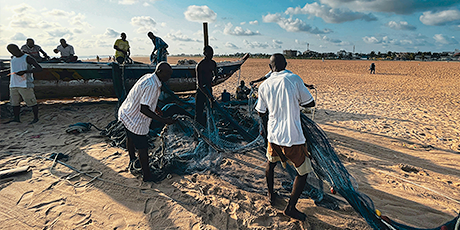 Stretching between the Atlantic Ocean and Lake Nokoué, Cotonou functions as Benin’s largest city and primary economic hub, even though Porto-Novo is the official capital. The city is anchored by its busy port, open-air markets like Dantokpa Market, and major transport routes connecting the region. Street life, trade, and coastal activity define much of the urban landscape, with neighborhoods and waterfront areas blending commerce and daily movement.
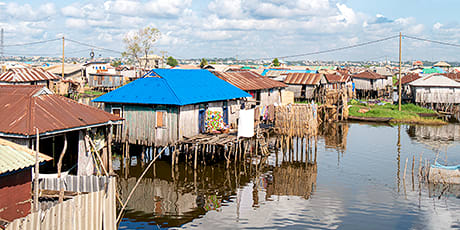 Built entirely on stilts above Lake Nokoué, Ganvié is one of West Africa’s largest lake villages, home to a long-established Tofinu community. The settlement was originally founded as a refuge, with homes, schools, markets, and transport all constructed on water. Canoes serve as the primary form of movement, and daily life revolves around fishing and lake-based trade across interconnected waterways.
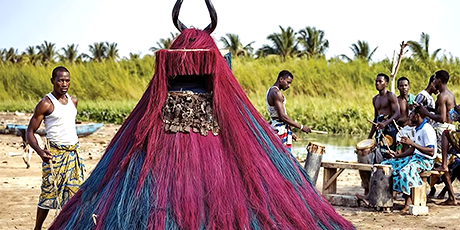 Held annually on January 10 in Ouidah, the Vodun Festival is a national celebration of Benin’s traditional religion and cultural identity. The event brings together practitioners from across the country and the diaspora for ceremonies, drumming, dances, and rituals performed at temples and sacred sites. Public gatherings often take place along the Route des Esclaves and near coastal shrines, reflecting both spiritual practice and historical remembrance.
Fast Facts
Already booked on one of our packages to Benin? See everything you need to know before you go.
| Overview | Capital: Porto-Novo |
| Entry requirements | Please see our Entry Requirements page. |
| Weather | Benin has a tropical climate with warm temperatures year-round. The dry season, generally from November through February, is often considered the best time to visit, while rainy seasons vary by region and bring lush scenery and occasional showers. |
| What to wear | Benin’s tropical climate calls for lightweight, breathable fabrics and comfortable walking shoes. Sun protection is recommended for outdoor excursions, and modest clothing is appropriate when visiting cultural or religious sites. Travelers may also wish to bring a light jacket or rain layer, particularly during the rainy season. |
| Dining | Beninese cuisine reflects the country’s rich cultural heritage, featuring dishes made with yams, maize, rice, seafood, and flavorful sauces. Local specialties include grilled fish, pâte (cornmeal dough), and spicy stews. |
| Tipping | Tipping is appreciated in Benin, particularly for local guides, drivers, and hotel staff. Small gratuities for good service are welcomed in restaurants and other hospitality settings. Your final documents will provide guidance on customary tipping practices. |
| Money & Credit Cards | The local currency is the West African CFA franc (XOF). Credit cards are accepted at some hotels and larger establishments, but cash is recommended for markets and smaller businesses. ATMs are available in major cities, including Cotonou. Always notify your bank prior to departure to avoid any problems using your credit or debit card while traveling. |
| Shopping | From vibrant markets to artisan workshops, Benin offers a variety of handcrafted goods, including textiles, wood carvings, bronze work, beads, and traditional artwork. Bargaining is common in local markets. |
| Electricity & Power Adapters | Benin uses 220V electricity with Type C and Type E electrical outlets. Travelers from North America should bring a plug adapter and ensure their devices are compatible with 220–240V power. Learn more about electrical standards around the world. |
| Cell Phones & Internet | Cell coverage is generally reliable in cities and along major travel routes, though service may be limited in rural areas. Travelers should ensure that international roaming is enabled with their provider or purchase an international roaming package prior to travel. An eSIM may also be a convenient alternative, particularly for multi-country trips, as local SIM cards can require registration and may not function across borders. Want to take your cell phone, tablet or laptop, but not sure how to get cell service or wifi? Read up on using your cell phone abroad and the top 5 ways to get Internet abroad. |
| Did you know? |
|