
 Togo
Togo
Though one of Africa’s narrowest countries, Togo encompasses a surprising variety of landscapes and communities between the Gulf of Guinea and the savannas of the north. Coastal cities, lakeside settlements, fertile highlands, and traditional villages lie within relatively short distances of one another, creating a country where regional differences are easily experienced in a single journey. Trade, agriculture, and long-established cultural traditions continue to shape everyday life, while connections to neighboring Ghana and Benin reflect centuries of movement across the region. From busy markets and waterfront communities to historic towns and ceremonial traditions, Togo offers a window into the diversity of West Africa on a compact scale.
Tours & Packages
- Destinations: Togo
- including closed packages

Trip Reviews & Photos
We love hearing your stories and seeing your photos! Check out our entire fan photo gallery and upload your photos.
Highlights
- Lomé
Situated along the Gulf of Guinea, Lomé serves as Togo’s capital and largest city. The city developed around one of West Africa’s important deep-water ports and continues to function as the country’s economic and commercial center. Markets, government institutions, and coastal neighborhoods shape much of daily life, while its location near the Ghanaian border has long made Lomé a crossroads for regional trade and movement throughout West Africa.
- Togoville
Set on the northern shore of Lake Togo, Togoville occupies an important place in the country’s history and spiritual traditions. The town takes its name from the former Kingdom of Togo and is known as the site where German representatives signed a treaty with local leaders in 1884, establishing the protectorate of Togoland. Today, Togoville is associated with both Catholic pilgrimage and traditional religious practices, with churches, shrines, and ceremonial sites reflecting the coexistence of different faiths within the community.
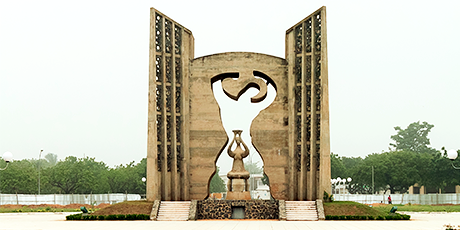 Situated along the Gulf of Guinea, Lomé serves as Togo’s capital and largest city. The city developed around one of West Africa’s important deep-water ports and continues to function as the country’s economic and commercial center. Markets, government institutions, and coastal neighborhoods shape much of daily life, while its location near the Ghanaian border has long made Lomé a crossroads for regional trade and movement throughout West Africa.
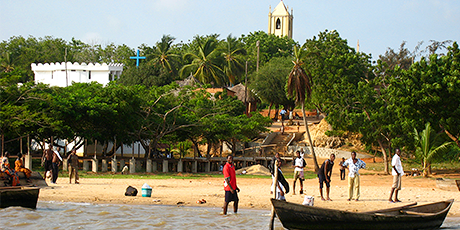 Set on the northern shore of Lake Togo, Togoville occupies an important place in the country’s history and spiritual traditions. The town takes its name from the former Kingdom of Togo and is known as the site where German representatives signed a treaty with local leaders in 1884, establishing the protectorate of Togoland. Today, Togoville is associated with both Catholic pilgrimage and traditional religious practices, with churches, shrines, and ceremonial sites reflecting the coexistence of different faiths within the community.
Fast Facts
Already booked on one of our packages to Togo? See everything you need to know before you go.
| Overview | Capital: Lomé |
| Entry requirements | Please see our Entry Requirements page. |
| Weather | Togo has a tropical climate with warm temperatures year-round. The dry season, generally from November through February, is often considered the best time to visit, while rainy seasons vary by region and bring lush landscapes and occasional showers. |
| What to wear | Pack lightweight, comfortable clothing suitable for warm weather, along with sturdy walking shoes for sightseeing. Sun protection, including a hat and sunscreen, is recommended. Modest dress is advised when visiting villages, markets, and places of worship. A lightweight rain jacket can be helpful during seasonal showers. |
| Dining | Togolese cuisine blends West African flavors with French influences. Local specialties include grilled fish, spicy stews, yams, plantains, and fufu, often enjoyed alongside fresh tropical fruits and regional sauces. |
| Tipping | Tipping is appreciated in Togo, particularly for local guides, drivers, and hotel staff. While not always expected, gratuities are a thoughtful way to recognize good service. Your final documents will provide guidance on customary tipping practices. |
| Money & Credit Cards | The local currency is the West African CFA franc (XOF). Credit cards are accepted at some hotels and larger businesses, but cash is recommended for markets and smaller establishments. ATMs are available in major cities such as Lomé. Always notify your bank prior to departure to avoid any problems using your credit or debit card while traveling. |
| Shopping | Local markets offer a colorful array of handmade crafts, textiles, beads, wood carvings, and traditional artwork. Bargaining is common and can be an enjoyable part of the shopping experience. |
| Electricity & Power Adapters | Togo uses 220V electricity with Type C and Type E electrical outlets. Travelers from North America will need a plug adapter and should ensure their devices are compatible with 220–240V power. Learn more about electrical standards around the world. |
| Cell Phones & Internet | Cell coverage is generally reliable in cities and along major travel routes, though service may be limited in rural areas. Travelers are encouraged to confirm that international roaming is enabled with their provider or purchase an international roaming package before departure. An eSIM may also be a convenient option, as local SIM cards can involve registration requirements and may not work across multiple countries. Want to take your cell phone, tablet or laptop, but not sure how to get cell service or wifi? Read up on using your cell phone abroad and the top 5 ways to get Internet abroad. |
| Did you know? |
|